



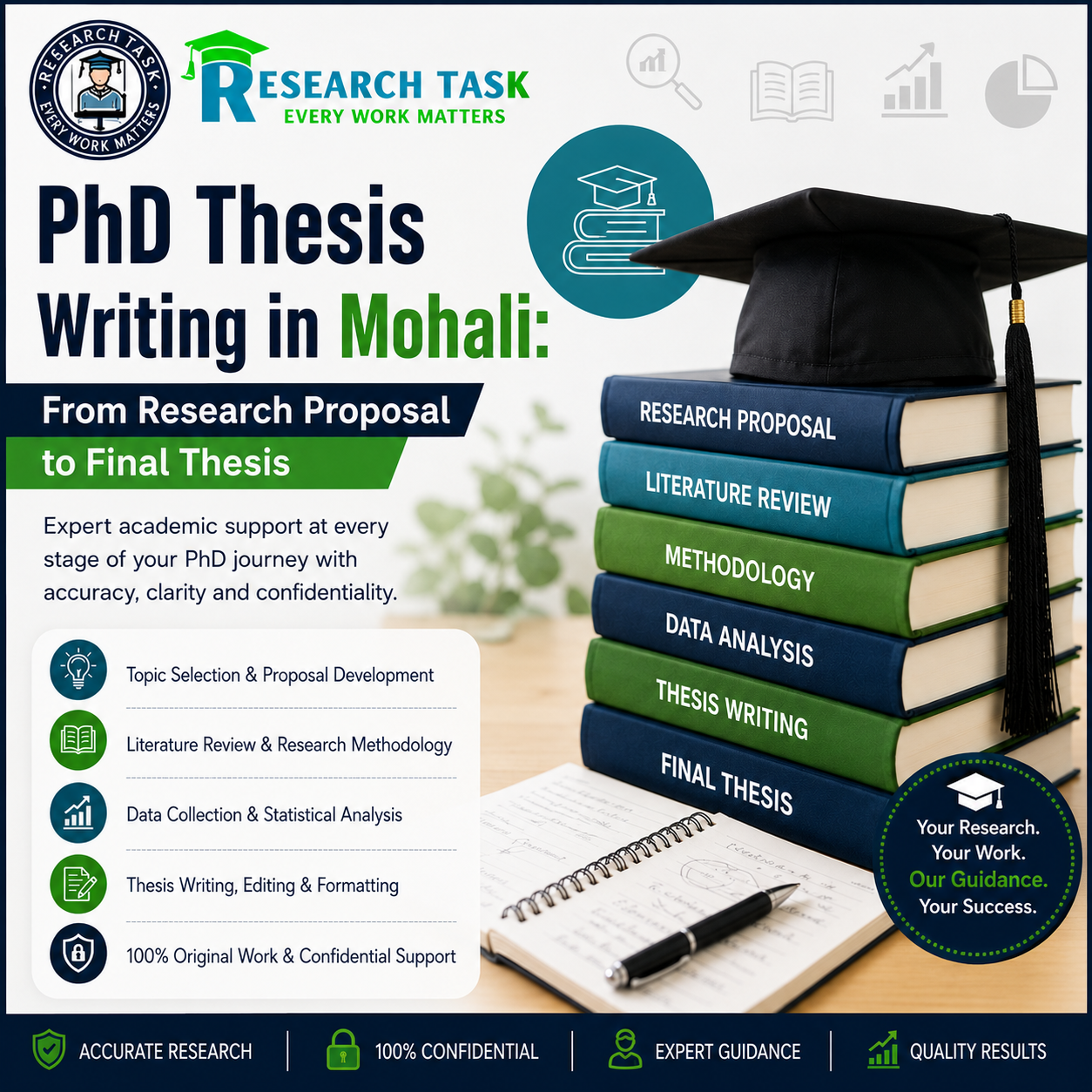


Writing a PhD thesis is one of the most important and challenging stages of doctoral research. From selecting a research topic and preparing a proposal to conducting research, analysing data, and presenting the final findings, every stage requires careful planning and academic accuracy.
For research scholars looking for PhD thesis writing in Mohali, professional research guidance can help make the process more structured and manageable. The right support can assist scholars with research methodology, literature review, statistical analysis, academic writing, referencing, editing, and final thesis preparation while keeping the researcher’s own work and academic requirements at the centre.
What Is a PhD Thesis?
A PhD thesis is a detailed academic document that presents original research conducted by a doctoral scholar. It explains the research problem, objectives, methodology, findings, analysis, and conclusions of the study.
A well-structured thesis generally demonstrates:
- A clearly defined research problem
- A strong understanding of existing literature
- A suitable research methodology
- Proper data collection and analysis
- Original findings or contribution to the field
- Appropriate academic referencing
- Clear conclusions and recommendations
The exact structure and requirements can vary according to the university, discipline, and research methodology.
PhD Thesis Writing Process: From Research Proposal to Final Thesis
PhD thesis writing is not limited to writing the final document. It is a step-by-step research process that begins much earlier with topic selection and proposal development.
1. Research Topic Selection
Choosing an appropriate research topic is the foundation of a successful PhD project. A good topic should be relevant to the field, researchable within the available resources and time, and capable of addressing a meaningful research problem.
Researchers should also examine existing studies to identify areas where further research is required.
2. Research Proposal Development
The research proposal explains what the scholar intends to study and how the research will be conducted. It generally includes the research background, problem statement, objectives, research questions or hypotheses, literature overview, methodology, and expected outcomes.
A clear proposal helps establish the direction of the research before the detailed study begins.
3. Literature Review
The literature review examines existing research related to the selected topic. Instead of simply summarising previous studies, a strong literature review compares findings, identifies patterns and limitations, and establishes the research gap.
This section helps demonstrate why the proposed research is relevant and how it contributes to the existing body of knowledge.
4. Research Methodology
The methodology chapter explains how the research will be conducted. Depending on the research area, scholars may use qualitative, quantitative, or mixed-method approaches.
This section may cover:
- Research design
- Population and sample
- Sampling technique
- Data collection methods
- Research instruments
- Variables and measures
- Data analysis techniques
- Ethical considerations
Selecting an appropriate methodology is important because it directly affects the reliability and interpretation of research findings.
5. Data Collection and Analysis
After developing the research framework, scholars collect the required primary or secondary data. The collected information is then organised and analysed using suitable methods.
Quantitative research may involve statistical techniques and software such as SPSS, while qualitative research may involve interviews, thematic analysis, coding, or other approaches.
The analysis should be connected directly to the research objectives and questions.
6. Thesis Chapter Writing
Once the research progresses, the findings need to be presented in a logical thesis structure. A typical PhD thesis may include:
- Introduction
- Literature Review
- Research Methodology
- Results or Data Analysis
- Discussion
- Conclusion and Recommendations
Some universities or disciplines may follow a different structure. Therefore, scholars should always follow their institution’s official thesis guidelines.
7. Discussion and Conclusion
The discussion chapter explains what the research findings mean and how they relate to previous studies. It may also address similarities, differences, and possible reasons for the results.
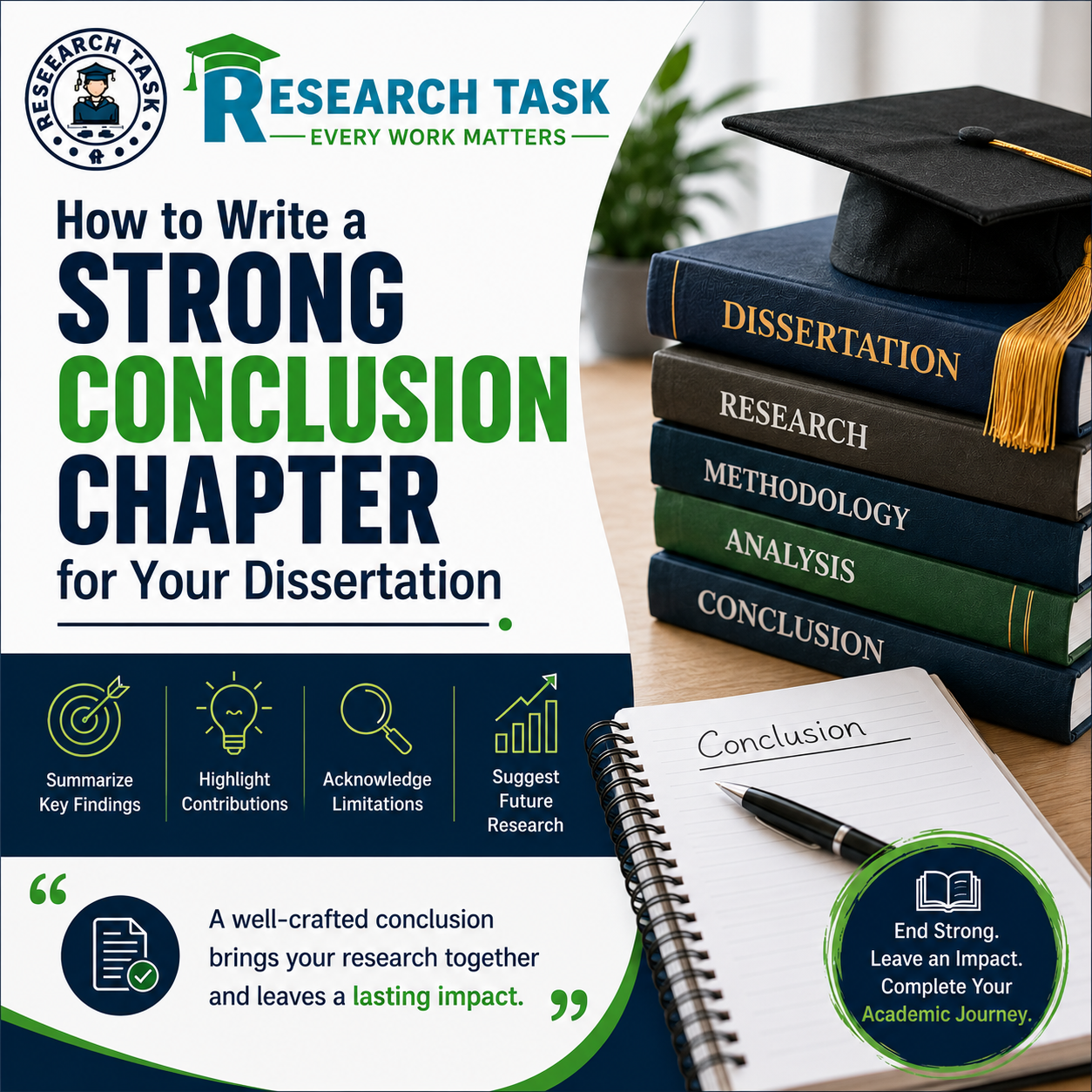
The conclusion brings together the major findings of the study. It can also highlight the research contribution, limitations, recommendations, and possible areas for future research.
8. Referencing and Formatting
Academic referencing is an essential part of thesis writing. Researchers must properly acknowledge the sources used in their work and follow the required citation style.
Depending on the university or discipline, this may include APA, MLA, Chicago, Harvard, Vancouver, or another referencing style.
Formatting should also follow the institution’s requirements for headings, margins, tables, figures, page numbering, references, and other elements.
9. Editing and Proofreading
Before final submission, the thesis should be carefully reviewed for grammar, clarity, structure, consistency, formatting, and referencing.
Proofreading focuses on correcting language and presentation issues, while academic editing can involve improving clarity, flow, organisation, and consistency without changing the researcher’s intended meaning.
Common Challenges Faced by PhD Scholars
PhD scholars often manage research alongside teaching, employment, personal responsibilities, or other academic commitments. Some common challenges include:
- Finding a clear research gap
- Managing a large amount of literature
- Selecting an appropriate methodology
- Designing research instruments
- Analysing complex data
- Organising multiple thesis chapters
- Maintaining consistent academic writing
- Managing citations and references
- Meeting university formatting requirements
- Preparing the thesis within deadlines
Planning each stage in advance can make the overall research process more manageable.
How to Choose PhD Thesis Writing Support in Mohali
When searching for PhD thesis writing services in Mohali, scholars should look beyond simple writing assistance. Academic research support should be relevant to the researcher’s subject, methodology, university requirements, and stage of research.
Consider the following factors:
Research Expertise
Look for support that understands your research area and can provide subject-relevant guidance.
Methodology Support
The service should be able to explain research design, sampling, data collection, and analysis methods relevant to your study.
Academic Editing
Check whether the support includes academic editing, proofreading, formatting, and referencing rather than only basic grammar correction.
Data Analysis Assistance
If your research involves statistical analysis, verify whether the provider offers appropriate guidance for interpreting and presenting the results.
Confidentiality
Research-related documents may contain unpublished work and sensitive information. Ask about confidentiality and how your documents will be handled.
University Guidelines
Your thesis must follow the requirements of your university or institution. Any external support should work around these requirements rather than applying a generic format.
How ResearchTask Supports PhD Scholars
ResearchTask provides research and academic support for scholars working through different stages of their research journey. Support can include research guidance, thesis and dissertation assistance, literature review, research methodology, statistical analysis, academic editing, proofreading, and formatting.
For scholars looking for PhD thesis writing in Mohali, ResearchTask can provide structured assistance based on the requirements of the research project and the scholar’s stage of work.
The objective is to help researchers organise their work more effectively, understand different stages of the research process, and prepare academically structured documents.
Frequently Asked Questions
What is included in PhD thesis writing support in Mohali?
PhD thesis writing support may include research topic guidance, proposal development, literature review assistance, methodology guidance, data analysis, chapter structuring, academic editing, proofreading, referencing, and formatting. The exact support depends on the scholar’s requirements.
How long does it take to complete a PhD thesis?
There is no fixed timeframe for completing a PhD thesis. It depends on the research topic, methodology, data collection, analysis, university requirements, and the scholar’s progress. A detailed research plan can help manage the different stages more effectively.
Can I get help with PhD research methodology in Mohali?
Yes. Research methodology support can help scholars understand research design, sampling, data collection methods, research instruments, and appropriate analysis techniques for their study.
Is PhD thesis proofreading different from editing?
Yes. Proofreading primarily focuses on identifying errors in grammar, spelling, punctuation, formatting, and consistency. Academic editing can involve improving clarity, structure, flow, and presentation while preserving the researcher’s intended meaning.
Can ResearchTask help with statistical analysis?
ResearchTask provides statistical and research support for scholars whose projects require data analysis. The appropriate statistical method depends on the research objectives, data type, study design, and methodology.
How can I improve the quality of my PhD thesis?
A strong thesis should have a clearly defined research problem, relevant literature review, appropriate methodology, accurate analysis, logically presented findings, consistent referencing, and clear academic writing. Reviewing the thesis against your university’s guidelines before submission is also important.
Conclusion
A PhD thesis represents years of research, analysis, academic learning, and subject-specific work. The journey from research proposal to final thesis involves several interconnected stages, including literature review, methodology, data analysis, chapter writing, editing, and final formatting.
For scholars seeking PhD thesis writing in Mohali, structured research support can make these stages easier to organise and understand. With appropriate guidance and careful adherence to university requirements, researchers can develop a clear, well-structured thesis that effectively presents their research and findings.